Technology investment alone does not drive business transformation in high-precision industries. The missing link is workforce capability — the ability to apply tools consistently, accurately, and at scale.
Organizations today are under pressure to reduce ramp-up time, improve engineering accuracy, shorten delivery cycles, and strengthen execution in a highly complex market environment.
This challenge is particularly relevant in Malaysia and Singapore, where industrial transformation initiatives are accelerating the shift toward higher-value, technology-driven industries.
Malaysia’s New Industrial Master Plan 2030 (NIMP 2030)
NIMP 2030 aims to transform the manufacturing and related services sectors through a mission-based industrial strategy.
Singapore’s Manufacturing 2030 Vision
Manufacturing 2030 Vision aims to grow manufacturing value-added by 50% from 2020 to 2030.
In both markets, building workforce capability is critical to turning technology investments into real business outcomes.

The Real Transformation Challenge: Workforce Capability
Across high-precision industries, the greatest barrier to transformation is often not access to technology, but the ability to develop the workforce capability required to use it effectively.
Organizations commonly face challenges such as:
- Slow onboarding of new engineers
- Inconsistent use of CAD, CAM and simulation tools
- Skills gaps in advanced engineering concepts
- Heavy dependence on a few experienced individuals
- Difficulty in standardizing technical knowledge across teams
These gaps can slow execution, increase errors, and limit the return on technology investments.
What This Looks Like Across Industries
While each industry operates in a different environment, the workforce capability challenges are often similar.

Semiconductor
Organizations need to accelerate design and manufacturing readiness while ensuring engineers can keep pace with increasingly advanced tools, workflows, and product complexity.

Aerospace & Defence
Teams require consistent technical execution, strong engineering discipline, and faster readiness across complex programs, where errors are costly and experience gaps are difficult to absorb.

Precision Engineering & Automation
Companies need to empower engineering teams to work more independently, apply best practices consistently, and keep up with advanced automation, robotics, and digital design requirements.
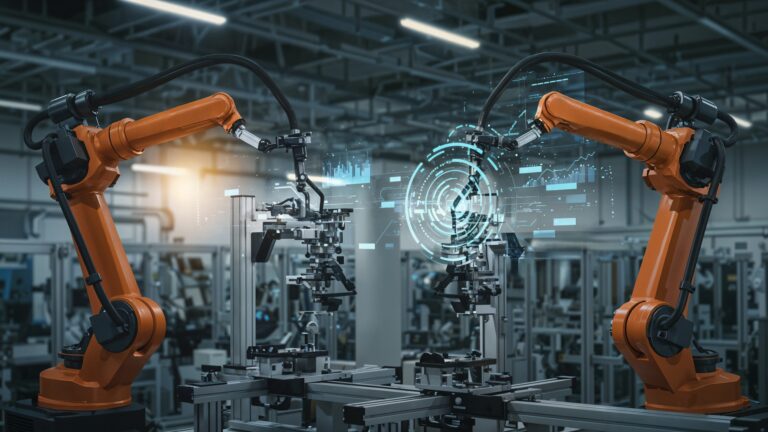
Advanced Manufacturing
Manufacturers need to onboard talent more efficiently, standardize technical knowledge, and improve execution consistency as they modernize operations and scale production.
Across all four industries, sustainable competitive advantage depends not only on investing in advanced systems, but also on building the capability to use them with speed, confidence, and consistency.
How SolidProfessor Supports Business Transformation?
As a value-added benefit within the CVS Subscription Plan, SolidProfessor enables organizations to build technical capability in a structured and scalable way.
With standardized learning pathways, advanced engineering content and progress tracking, it helps teams to:
- Speed up onboarding
- Improve design consistency
- Reduce technical errors
- Increase independent contribution from engineers
- Improve adoption of engineering tools and systems

Rather than relying on reactive or informal training, organizations can establish a strong and consistent foundation for technical execution across teams.
Turning Capability into Competitive Advantage
In high-precision industries, competitive advantage comes not from tools alone, but from the ability to use them effectively at scale.
SolidProfessor helps organizations bridge this gap — transforming technical learning into faster readiness, stronger execution, and greater business impact.