CADVision Systems Industry Insights
Industrial AI and virtual twins can connect engineering data, physics-based simulation and workforce capability to support better manufacturing decisions.
What 3DEXPERIENCE Forum Vietnam 2026 Means for Manufacturers
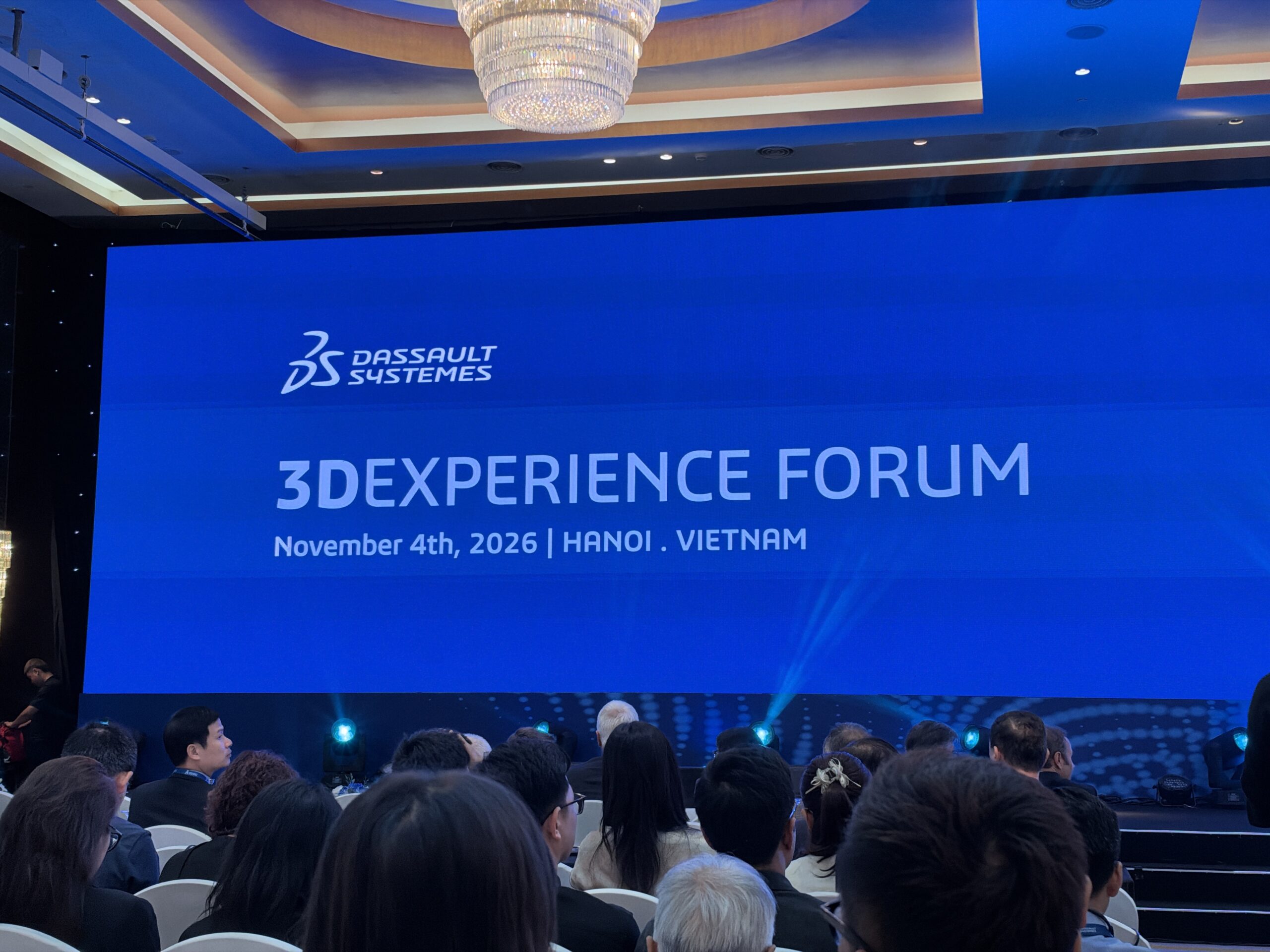
A manufacturer's next breakthrough may begin before anything changes on the production floor. At 3DEXPERIENCE Forum Vietnam 2026 in Hanoi, speakers explored how industrial AI and virtual twins can help teams evaluate alternatives before committing time, material and investment.
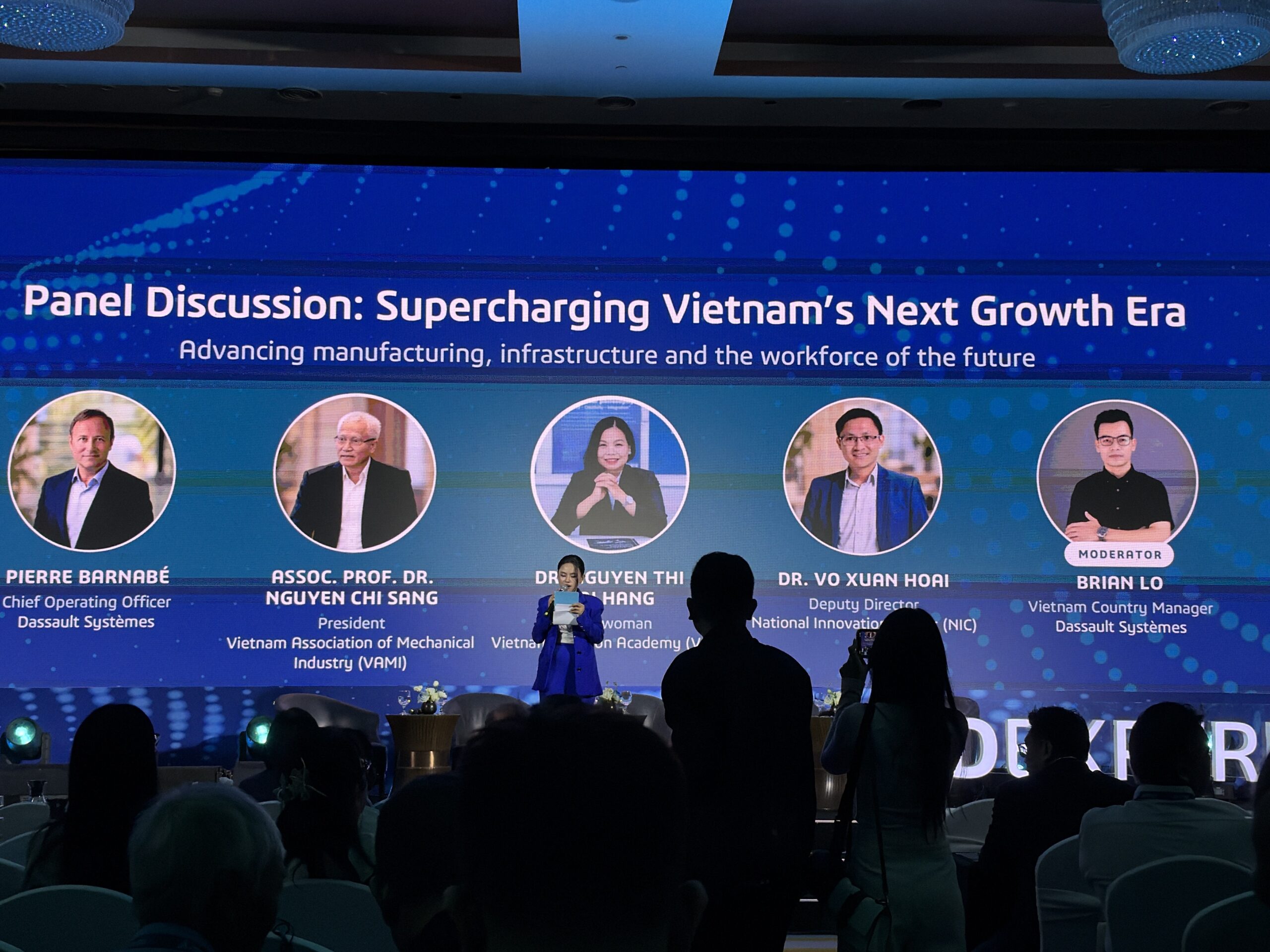
Dr Vo Xuan Hoai, Deputy Director of Vietnam's National Innovation Center, discussed AI adoption, manufacturing pilots, talent and research collaboration. Brian Lo, Vietnam Country Manager at Dassault Systèmes, contributed the local market and ecosystem perspective.
For manufacturers in Malaysia and Singapore, the practical question is how to turn engineering data into more confident action. The forum's clearest lesson was that advanced technology creates value only when it is grounded in trustworthy information, physical context and people who understand the decision involved.
How Industrial AI Impacts Manufacturing Decisions
Industrial AI combines artificial intelligence with engineering knowledge, physics and operational data to support decisions in design, manufacturing and operations.
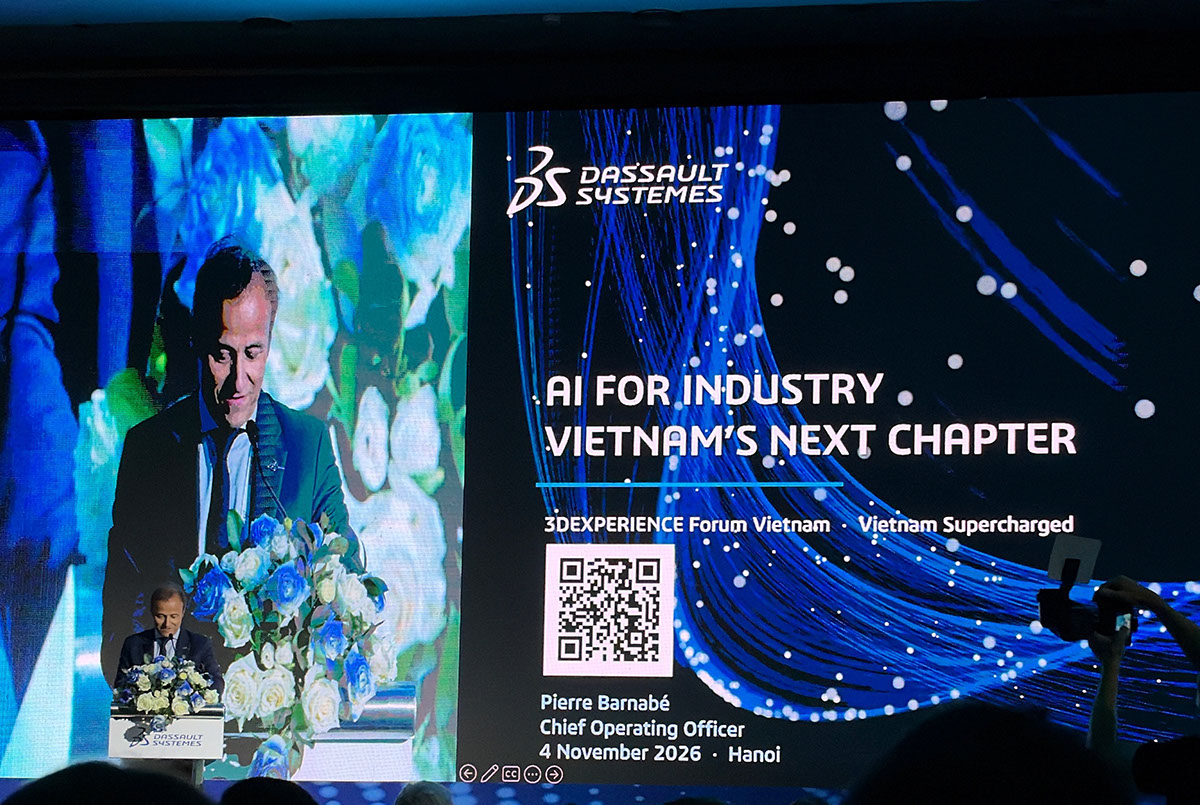
Pierre Barnabé, Chief Operating Officer of Dassault Systèmes, described three foundations for industrial AI:
- Industry knowledge that gives information meaning.
- Physics that reflects how products and processes behave.
- Operational context that connects analysis with real decisions.
Engineering decisions may depend on materials, loads, tolerances, process conditions and operating limits. Without that context, a confident AI answer may still be unsuitable. A better starting question is: which decision could be improved with better information, analysis or prediction?
How Virtual Twins Improve Engineering Decisions
A virtual twin is a contextual digital representation that connects models, data and engineering knowledge to help teams understand, evaluate and predict product, process or system behaviour.
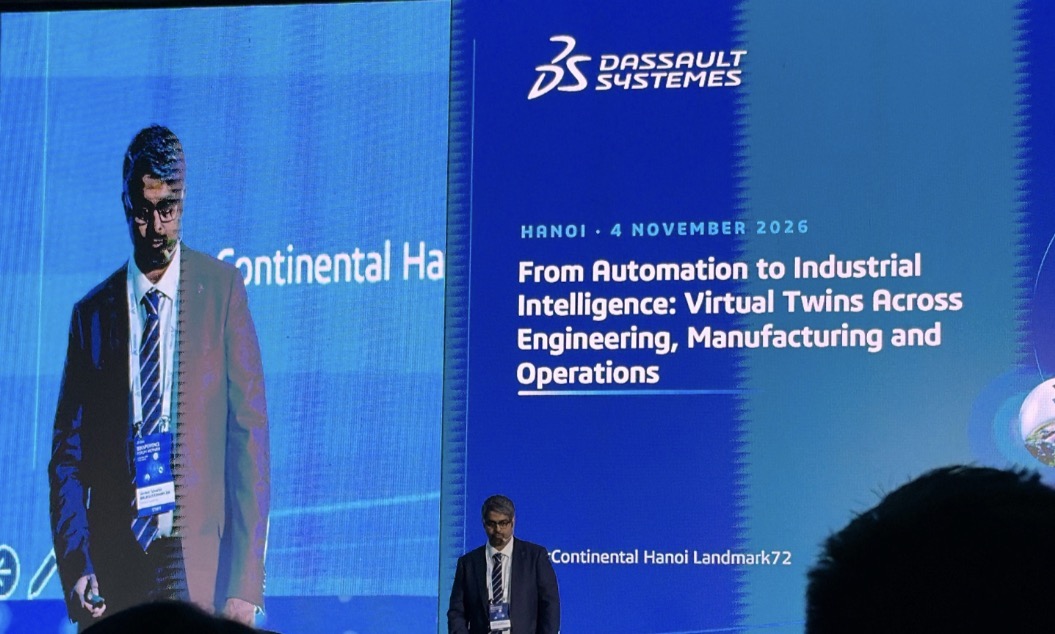
Venkat Srivatsn Balasubramanian, Industry Process Consultant Director at Dassault Systèmes, traced the progression from 3D design and product lifecycle management towards virtual twins and Industry World Models.
The value of a virtual environment lies in the decision it supports. A useful first application may be a recurring design-validation question, a disruptive engineering change or a process scenario that is costly to repeat physically. Define the decision, required data, assumptions, validation method and measure of success before expanding the scope.
Why Connected Engineering Data Comes First
Associate Professor Dr Chi Sang Nguyen, President of the Vietnam Association of Mechanical Industry, highlighted fragmented information and inconsistent revision control as constraints on industrial progress. When teams cannot confidently identify the current released design, they risk rework, slow approvals and decisions based on outdated information.
SOLIDWORKS PDM can support controlled storage, search, version and revision control, permissions and engineering workflows. For distributed collaboration and broader data-governance needs, 3DEXPERIENCE Works governance and data management can provide a connected environment for people, applications and product information.
How Simulation Supports Virtual Validation
The forum's emphasis on physics-led industrial intelligence points to a practical discipline: evaluate product behaviour before committing to every physical iteration. Depending on the question, simulation can help engineers explore:
- Structural performance and product durability.
- Motion and mechanical behaviour.
- Thermal conditions and heat transfer.
- Fluid flow under defined assumptions.
SOLIDWORKS Simulation provides finite-element analysis capabilities in a virtual design environment. The value of its results still depends on appropriate material data, loads and constraints, mesh quality, verification and engineering interpretation.
Why Workforce Capability Determines Technology Value
Dr Thi Hai Hang Nguyen, Strategic Advisor to the Vietnam Aviation Academy, connected digital engineering, industrial AI and data with experiential and lifelong learning. The discussion referenced applications in vehicle design, intelligent maintenance and immersive training.
The broader lesson applies across the region: access to software is not the same as the capability to use it responsibly. Training should be linked to real roles and workflows. CADVision Systems provides SOLIDWORKS Simulation training and other engineering-software courses aligned with practical applications.
What This Means for Manufacturers in Malaysia and Singapore
For manufacturers in Malaysia and Singapore, the practical question is how to turn engineering data into more confident action. The opportunity begins with connected design information, disciplined workflows and people who understand the product.
A useful first project could address revision confusion, repeated design work or costly physical iterations. Start with one problem, identify the information and people involved, and define a measurable outcome before expanding the scope.
Three Practical Priorities for Engineering Teams
- Establish reliable engineering information. Review where data is stored, how revisions are controlled, who approves changes and how released information reaches manufacturing.
- Select one decision that benefits from virtual evaluation. Choose a design or process decision that is slow, expensive or difficult to repeat physically, then define assumptions and validation criteria.
- Build capability around the workflow. Identify who creates, manages, approves and uses the information, then provide role-appropriate training and ownership.
How CADVision Systems Can Support the Next Step
CADVision Systems supports engineering and manufacturing organisations in Malaysia and Singapore with SOLIDWORKS, SolidCAM, engineering data management, simulation, technical support and training. The appropriate starting point depends on the workflow the organisation needs to improve.
- SOLIDWORKS PDM for controlled engineering files, revisions and workflows.
- SOLIDWORKS Simulation for defined product-analysis and virtual-testing needs.
- 3DEXPERIENCE-related solutions for connected collaboration and engineering-data workflows.
- Engineering-software training aligned with team roles and intended applications.
Industrial AI and Virtual Twins: Frequently Asked Questions
What is industrial AI in manufacturing?
Industrial AI applies artificial intelligence to engineering, manufacturing and operations using industrial data and domain knowledge. Its usefulness depends on reliable information, physical context, appropriate infrastructure and people qualified to interpret and act on the result.
What is a virtual twin in manufacturing?
A virtual twin is a contextual digital representation used to understand, analyse or predict the behaviour of a product, process or system. Depending on its scope and data connections, it can help teams explore scenarios before making physical changes.
How is a virtual twin different from a 3D model or simulation?
A 3D model primarily represents geometry. A simulation evaluates behaviour under defined assumptions. A virtual twin can connect relevant models and data to represent a product, process or system in its operating context.
How can manufacturers reduce engineering data fragmentation?
Map file and approval workflows, establish clear ownership, standardise revision and release practices, and use suitable product-data-management tools. SOLIDWORKS PDM can support controlled storage, search, revision control and workflow management.
Can SOLIDWORKS users start with virtual validation?
Yes. Start with a defined design question and assess whether SOLIDWORKS Simulation is suitable. Models, materials, loads, constraints, mesh strategy and results should be checked by appropriately qualified people.
How should a manufacturer prepare for industrial AI?
Choose a specific engineering or operational decision, confirm that the required data is trustworthy and accessible, review infrastructure and security requirements, and identify who will validate and use the output. Begin with a focused pilot and measurable success criteria.
Where Can Manufacturers Find Local Engineering Support?
Manufacturers can connect with CADVision Systems, an authorised SOLIDWORKS and SolidCAM partner, through teams in Kuala Lumpur, Penang, Johor Bahru and Singapore for local software, technical support and engineering-training enquiries.
Start with one workflow your organisation wants to improve. The CADVision Systems team can help identify whether data management, simulation, connected collaboration or training is the appropriate next step.